Country Farm Coloring Book
LoveColoring GameBoard
4.91.03K Reviews
- Version
- 2.1.9
- Installs
- 1.00M
- Age Rating
- Everyone
Screenshots
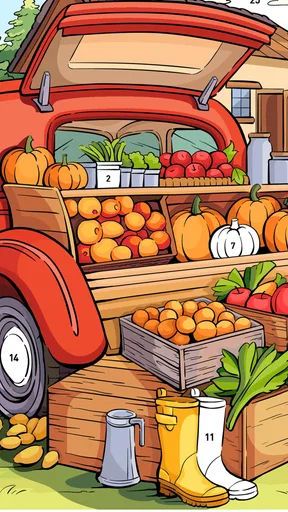
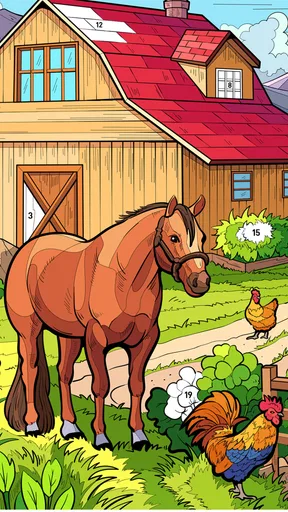
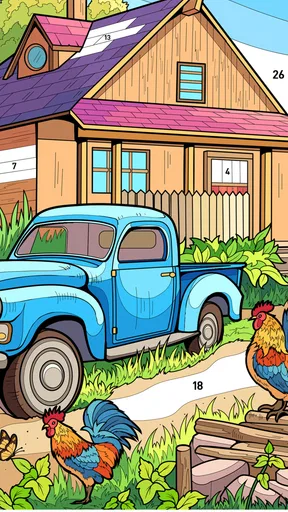
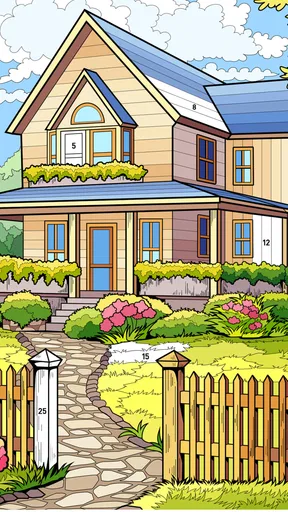
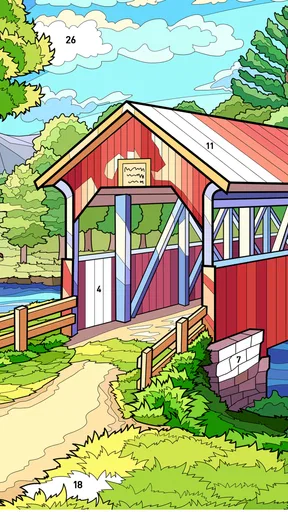
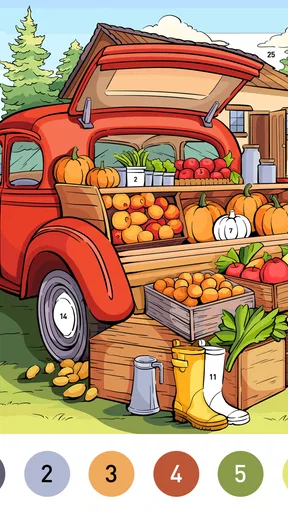
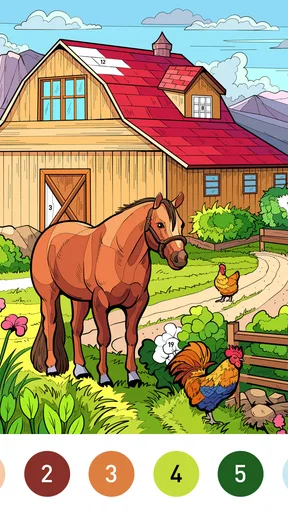
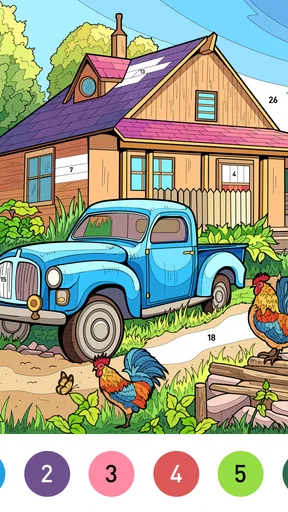
Our Review of Country Farm Coloring Book
 Analysis by Appyee
Country Farm Coloring Book is the kind of board game I open when I want a quiet activity rather than a demanding challenge. Its setting is built around farm scenes, and the main appeal is the simple act of filling illustrations with color. I found it easy to understand almost immediately: choose a picture, work through its areas, and enjoy the gradual change from an unfinished drawing to a complete scene. That simplicity is its strongest quality, but it also defines its limits.
After spending time with it, I see this as a relaxing coloring game for short breaks, family-friendly play, and anyone who enjoys visual progress without complicated rules. It is free to start, rated for Everyone, and made by LoveColoring Game. The store presents it as a unique coloring experience, but I would describe it more plainly: it is a gentle digital coloring book with a country-farm theme and a progression loop based mainly on completing pictures.
How the first goals shape the experience
The first goal is clear: finish a farm illustration. That clarity matters because there is no long tutorial to decode and no complicated board-game rule set standing between me and the activity. I can begin by choosing a scene and immediately focus on matching colors to the marked spaces. For a child, that makes the game approachable; for an adult, it makes it useful when I have only a few minutes and do not want to learn a new system.
The early satisfaction comes from visible completion. An empty or partly colored image gives me a small target, while every filled section provides a sense that I am moving somewhere. This is a better fit for relaxed players than for people who need a strong strategic objective. The game does not need elaborate goals to be enjoyable, but it does rely on the pleasure of finishing one image after another.
I also like that the farm theme gives the activity a consistent identity. Country scenes, animals, fields, and rural objects create a warmer mood than a collection of unrelated abstract designs would. That makes the game especially suitable for younger players or for adults who prefer cheerful, familiar imagery over intense competition. The theme is not merely a label; it sets the emotional pace of the sessions.
One useful way to approach the opening is to treat each picture as a small project instead of trying to rush through a large collection. I usually begin with the broadest, easiest-looking areas, then move toward smaller sections. This creates a visible transformation early and reduces the feeling that the image is barely changing. It is a simple habit, but it makes the coloring process feel more purposeful.
There is also a practical benefit for shared use. A parent can hand the device to a child without needing to explain combat, timers, complex scoring, or a competitive ranking. Two people can discuss color choices or take turns completing areas. I would not call it a multiplayer board game, but it works well as a calm, side-by-side activity.
What counts as progress here
The progress signals are mostly visual rather than numerical. A scene becoming more complete is the clearest feedback, and that is enough to keep the basic loop understandable. I never felt lost about what I was supposed to do next: the unfinished portions of the picture naturally point toward the next task.
This kind of progress is appealing because it does not punish a slow player. There is no need to memorize rules or optimize a move sequence before making progress. I can stop partway through and return later without feeling that I have damaged a larger strategy. For casual use, that flexibility is more valuable than a complicated achievement structure.
At the same time, players who expect deep unlock trees, detailed score chasing, or a board-game campaign may find the progress signals too light. The enjoyment comes from completion itself, not from mastering a complex system. That distinction is important before installing it. I would recommend it to someone who wants a calming visual task, not to someone looking for a competitive puzzle with layered goals.
The strongest progress rhythm happens when I avoid thinking of every picture as a single uninterrupted session. Completing one portion, pausing, and returning later keeps the activity from becoming monotonous. The game is well suited to this fragmented style because its central task is easy to resume. A short session can still feel complete if I finish a recognizable part of a scene.
For children, the visible transformation can also support patience. Instead of expecting an instant reward, the player sees that a finished farm picture comes from many small actions. I would still supervise younger users around any optional purchase prompts, but the coloring itself is gentle and accessible. Its Everyone age rating matches the non-threatening nature of the activity.
Difficulty: gentle, repetitive, and dependent on the picture
The difficulty curve is not built around increasingly complicated rules. It comes from the amount of detail in a drawing and from how long I want to stay focused. A simpler image can be completed quickly, while a more detailed one asks for steadier attention. That creates a soft form of challenge without turning the game into a stressful test.
This is where the experience differs from a traditional board game. In a board game, difficulty often comes from opponents, probability, planning, or resource management. Here, the challenge is closer to careful visual work. I am not trying to outthink another player; I am trying to notice the remaining areas and complete the composition at my own pace.
That approach works well for winding down, but it can feel repetitive if I play for too long. The basic action remains familiar, so the game does not constantly surprise me with new mechanics. My advice is to use it in short or medium sessions rather than expecting an all-evening campaign. It is more satisfying as a relaxing routine than as a game demanding uninterrupted attention.
Players who enjoy coloring but dislike precision-heavy tasks may appreciate the forgiving feel of a guided digital format. Players who want complete artistic freedom may prefer a drawing or painting application instead. This game is positioned between those experiences: it provides structure and a finished image to work toward, but it does not replace a full creative canvas.
One of my more useful habits was to change the order in which I approached each picture. Coloring every tiny section immediately can make progress feel slow. Starting with large connected areas gives the image shape sooner, while leaving small details for the end creates a final polishing stage. This does not change the rules, but it improves the perceived pacing and makes completion feel less mechanical.
Where retention helps and where it becomes pressure
The game encourages return visits through the simple appeal of unfinished scenes and the satisfaction of completing another illustration. That is a gentle kind of retention. I can come back because I want to see a farm image finished, not because I am worried about losing a streak or falling behind other players.
I prefer this low-pressure structure to systems that demand daily attendance. It makes the game easier to recommend to families and casual players who do not want another app competing for their attention. If I skip it for several days, I can return without needing to remember a complicated event schedule or rebuild momentum.
There is still a trade-off. Without a strong external challenge, my motivation depends heavily on whether I enjoy the available pictures and the coloring rhythm. Once the novelty of the farm theme settles, players who need constant goals may feel that the reason to continue is limited. The game’s retention strength is relaxation, not urgency.
The free price makes it easy to try without committing money at the start. However, optional in-app purchases range from $0.99 to $49.99 per item, so I would recommend checking purchase prompts carefully, particularly when a child is using the device. The broad range means the free entry point is convenient, but the overall experience can become more expensive for players who want to acquire many optional items.
I also think the purchase model affects how different people should approach the game. If I am satisfied with gradual access and occasional sessions, the free starting point may be enough. If I feel tempted to buy repeatedly just to remove every limitation or speed up access, I would pause and ask whether the relaxing activity is still worth that cost. A coloring game should remain a comfortable pastime, not a source of pressure.
How it compares with other coloring and board-game choices
Compared with a physical coloring book, this game is more convenient when I already have my phone or tablet nearby. I do not need colored pencils, an eraser, or a clear table. The digital format also makes it easy to switch between scenes and continue a partially completed image. The compromise is that the tactile feel of paper and the freedom to blend real colors are missing.
Compared with a general coloring app, the farm focus is both its advantage and its limitation. The consistent rural theme gives the experience a recognizable mood, which is useful if I specifically enjoy animals, fields, and countryside imagery. Someone looking for mandalas, fashion illustrations, fantasy art, or a broad catalog of unrelated subjects may be better served elsewhere.
Compared with a conventional board game, it offers far less social competition and strategic depth. There are no opponents for me to read, no turns to plan around, and no meaningful risk-reward decisions shaping a match. That is not a flaw if the goal is calm coloring, but it is a reason not to choose it as a substitute for a family board-game night built around interaction.
It also differs from a drawing app. Here, the picture provides direction, so I can relax into completing it rather than facing a blank page. That structure is helpful for beginners and for tired players. An artist who wants to create original compositions, control every brush, or experiment with layers will probably prefer a dedicated creative tool.
Who will enjoy it in everyday use
A realistic use case is a quiet ten-minute break after work. I can open a scene, complete several sections, and put the device away without having to remember a plot or protect a long winning streak. The same pattern works during travel, while waiting for an appointment, or before bed when a competitive game would feel too stimulating.
It can also suit a parent looking for a calm activity to share with a child. The farm setting is approachable, the age rating is Everyone, and the central task is easy to demonstrate. I would keep purchase controls in mind, especially because optional items can cost as much as $49.99, but the basic activity itself is accessible.
Adults who use coloring as a way to occupy their hands may enjoy the guided structure. I found that it works best when I accept the slow pace instead of treating each picture like a target to clear as quickly as possible. The game rewards attention more than speed, even though it does not turn that attention into a formal score.
I would skip it if I wanted a demanding puzzle, a competitive board experience, a story-driven adventure, or a fully open-ended art studio. It is also not the best choice if repetitive coloring quickly loses my interest. The farm theme can make the experience feel coherent, but it cannot provide unlimited variety for someone who needs dramatic changes from one session to the next.
Practical details before installing
The game is free to download and supports devices running Android 8.0 or later. Its current version is 2.1.9, and it has reached over a million installs, with a 4.9 average from around twenty-two thousand ratings. Those figures suggest that the simple concept has found a substantial audience, although popularity alone does not guarantee that its relaxed style will suit everyone.
It was released on November 17, 2023, and the developer is LoveColoring Game. I would approach the installation with the expectations of a casual coloring title rather than a large, evolving board-game platform. The important question is not whether it offers deep strategy; it is whether I want a convenient farm-themed way to complete pictures at my own pace.
The age rating of Everyone makes it broadly approachable, but families should still treat the purchase system thoughtfully. A child may understand how to color without understanding the value of an optional purchase. I would use the device’s purchase protections and explain that free access and paid extras are separate decisions.
My progression verdict
Country Farm Coloring Book sustains play through modest goals, clear visual progress, and a difficulty curve based on picture detail rather than complicated mechanics. Its pacing is strongest when I play in short sessions and let each completed section provide its own reward. The lack of intense challenge is deliberate, and for me that makes it a better relaxation tool than a traditional board game.
The progression is not deep enough for players who need elaborate unlocks, strategic mastery, or constant novelty. Its retention also depends on liking the farm theme and finding satisfaction in repetition. Still, I think the focused setting gives it more personality than a completely generic coloring tool, while the guided format makes it easier to start than a blank drawing app.
My final recommendation is straightforward: install it if you want a friendly, low-pressure coloring game for Android, especially for brief breaks or shared family use. Begin with the free experience, take your time with detailed scenes, and watch optional purchases if children use the device. The best reason to play is the calm sense of finishing a picture, not the promise of a deep board-game campaign. For that specific purpose, it does its job well.
In my experience, the game succeeds because it does not ask me to be competitive, artistic, or highly skilled. It asks me to notice small areas, choose colors, and enjoy a countryside image becoming complete. That is a narrow promise, but it is an honest one. If that kind of quiet progress sounds appealing, Country Farm Coloring Book is an easy recommendation; if you need strategic depth or unlimited creative control, I would choose a different type of game.
Verdict
Strengths of Country Farm Coloring Book
- Relaxing coloring activity suitable for children and adults
- Simple controls make it easy to color with taps and swipes
- Farm-themed artwork offers a friendly, familiar setting
- Can encourage creativity and improve focus during quiet time
- Works well as a casual activity for short play sessions
Limitations of Country Farm Coloring Book
- Limited theme variety may feel repetitive after extended use
- Some coloring tools or pages may require in-app purchases
- Small details can be difficult to color accurately on phones
- May include advertisements that interrupt the coloring experience
- Not ideal for users seeking advanced drawing or editing features
Other Releases by LoveColoring Game
View All
Fairytale Color by number game
Board4.9

Tangle Color by Number Book
Board4.9

Pop Color - Paint by number
Board4.8

Pop Jigsaw - Jigsaw Puzzles
Board4.9
Similar Picks in This Category
View All
Ludo King®
Gametion4.1

Ludo
Yarsa Games4.6

Tile Master® - Matching Game
Higgs Studio3.6

Checkers Online
CC Games4.6

Dominoes
Loop Games4.7

Chess
Chess Prince4.6
Frequently Asked Questions
What is Country Farm Coloring Book?
Country Farm Coloring Book is a relaxing digital coloring app centered on rural life and farm-themed illustrations. It typically includes scenes featuring barns, tractors, animals, crops, countryside landscapes, and other pastoral elements. Users can select a picture, choose colors from the available palette, and fill in areas by tapping the screen, making it suitable for casual play and creative relaxation.
Is Country Farm Coloring Book suitable for children?
The app can be suitable for children who enjoy coloring, especially because its farm theme is familiar and easy to understand. However, parents should check the recommended age rating, advertising settings, and any in-app purchase options before allowing independent use. Younger children may also benefit from supervision if the app contains external links, ads, or features that require tapping beyond the coloring pages.
Does Country Farm Coloring Book work without an internet connection?
Some coloring apps allow previously loaded pages to be used offline, while other features may require an internet connection. In Country Farm Coloring Book, basic coloring may work without constant connectivity, but advertisements, new content, updates, or purchase verification can depend on internet access. It is best to open the app once online and test the pages you want to use before traveling or playing offline.
Is Country Farm Coloring Book free to download and use?
Country Farm Coloring Book may be available as a free download, but free access does not always mean that every feature is completely unrestricted. The app may include advertising, optional purchases, locked illustrations, or other premium elements. Before downloading, review the store listing for current pricing and permissions, and check your device’s purchase controls if children will be using the application.
What devices are compatible with Country Farm Coloring Book?
Compatibility depends on the particular Android or iOS version offered by the developer, as well as the device’s available storage and performance. Most modern phones and tablets should handle a simple coloring application smoothly, but older devices may experience slower loading or limited support. Check the official Google Play or App Store listing for the required operating system and latest compatibility information before installing.
Play our best games!


